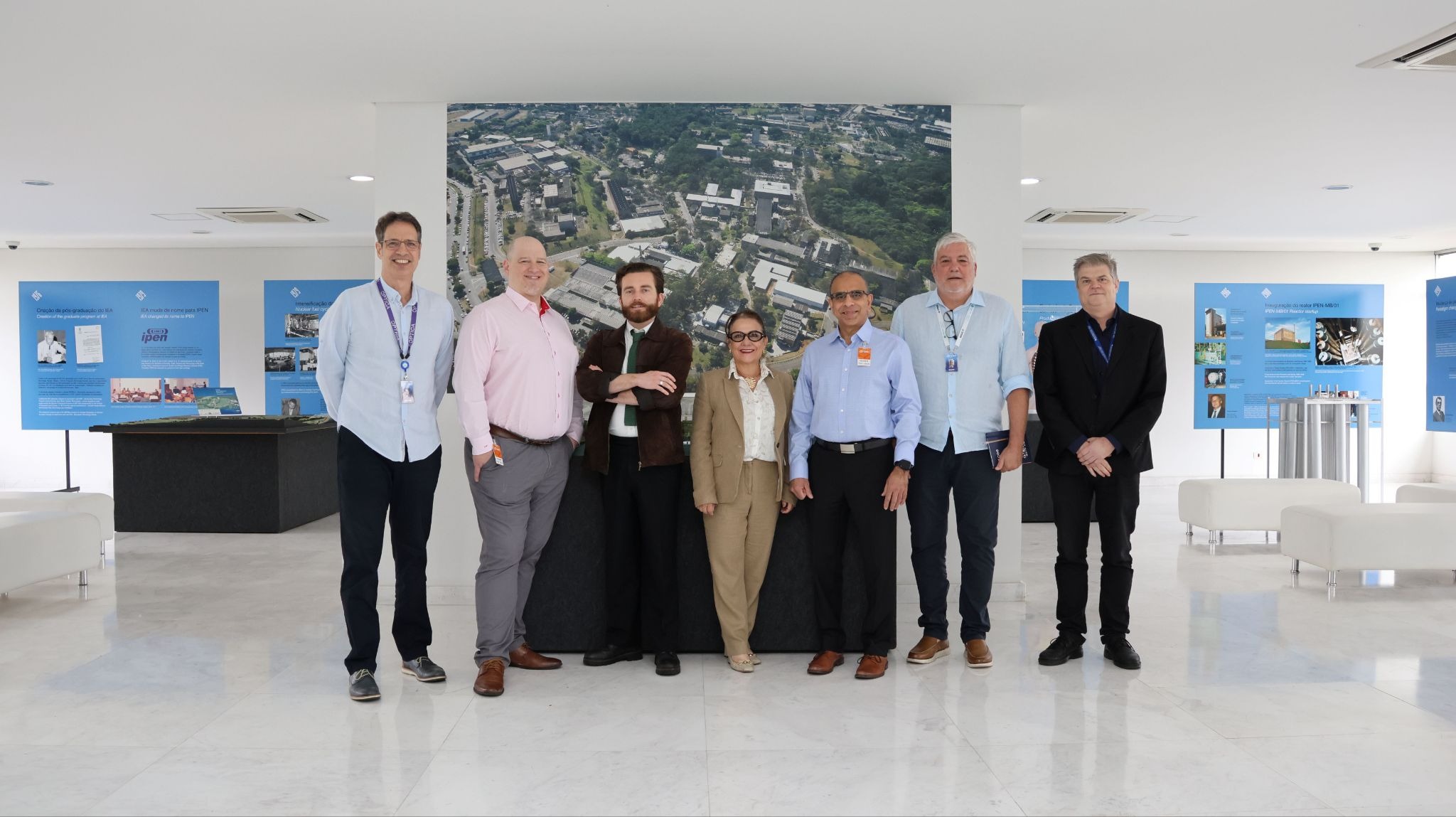


Astral Systems, a Bristol-based advanced technology company, and the Institute for Energy and Nuclear Research (IPEN/CNEN), Brazil's leading producer of radiopharmaceuticals, signed a Memorandum of Understanding (MOU).
The agreement aims to jointly explore a wide range of technological pathways for the production of medicinal radioisotopes.
This innovative development will be anchored in Astral’s “Next Generation Neutron Generating Technology” (MSF). The agreement also establishes plans for the deployment of a next-generation neutron technology device.
The strategic partnership represents a significant step toward expanding access to a catalogue of valuable, high-demand, but difficult-to-source isotopes. By combining their complementary capabilities, the two institutions aim to enable a new supply stream for critical isotopes such as Ac-225; a rare radioisotope essential for treating an increasing number of cancers, and to explore the efficient use of strategic raw materials in production.
Ram Mullur, Vice President of Strategic Development at Astral Systems, said:
“Astral’s goal is to decentralise isotope production across diverse geographic regions, reducing barriers to entry and making medical isotopes more accessible worldwide. Collaborating with renowned institutions like IPEN/CNEN, which share our vision, is fundamental. We are delighted to sign this MOU, which allows us to bring together the best talent, technologies, and resources to validate an effective alternative approach to supplying the life-saving radiopharmaceuticals that the world increasingly depends on.”
Niklaus Wetter, Director of Research, Development and Education at IPEN/CNEN, added:
“MSF technology is disruptive and facilitates a wide range of research across most of IPEN/CNEN’s areas of work. Furthermore, it is an excellent device for educational purposes and will be integrated into IPEN/CNEN’s postgraduate programme.”
Back to the hub