

1,000 workers sign petition warning Scotland risks investment without policy change
Nuclear highlighted as key to net zero, energy security and a just transition
MSPs urged to back new nuclear and protect Scotland’s industrial future
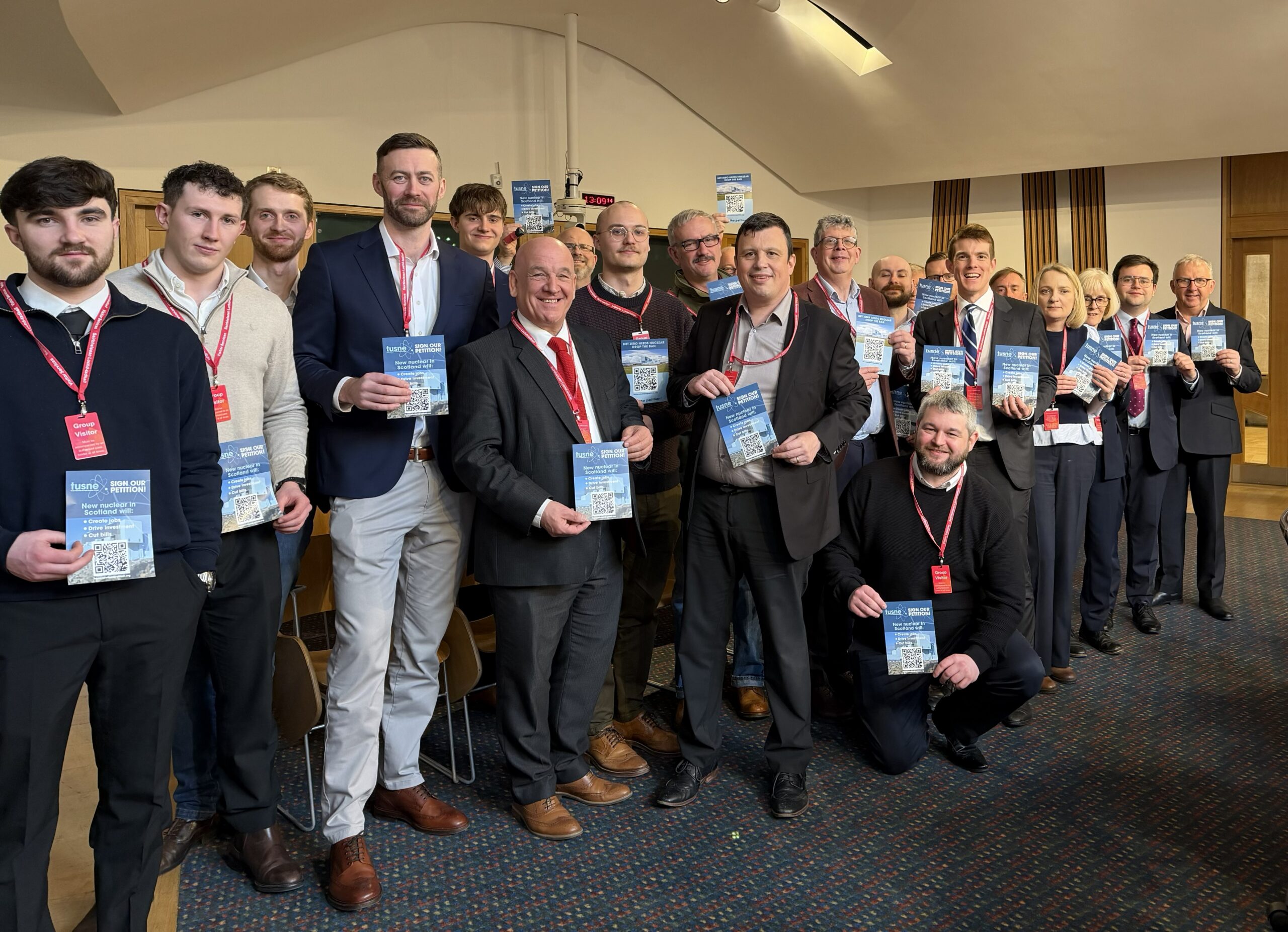
A petition signed by 1,000 nuclear workers across Scotland will be delivered to MSPs at the Scottish Parliament, calling for urgent action to lift the ban on new nuclear power.
Backed by workers from across the sector, the petition, which is addressed to the First Minister, urges policymakers to recognise nuclear energy as a vital part of Scotland’s future energy mix.
Signatories highlight the opportunity for Scotland to secure thousands of high-skilled, well-paid jobs and attract significant inward investment by backing new nuclear projects. They underline its role in delivering net zero, strengthening energy security and supporting a just transition for workers and communities.
The Nuclear Industry Association estimates that Scotland is already missing out on around 5,000 high-quality nuclear jobs. Without a change in policy, they warn these jobs and investments will go elsewhere.
With major programmes already underway across England and Wales, and countries around the world racing to invest billions in new nuclear, the group says Scotland’s current policy risks leaving its workforce, skills base and wider economy behind.
The petition will be shared with MSPs from all parties, with TUSNE (Trade Unionists for Safe Nuclear Energy) urging them to engage directly with workers and consider the economic and environmental case for new nuclear in Scotland.
TUSNE, which is made up of members from GMB, Unite and Prospect unions, is calling on the Scottish Government to work with trade unions, industry and communities to unlock new nuclear projects and secure the next generation of clean energy investment.
Andrew McKendry, former Torness nuclear apprentice, now a nuclear Procurement Engineer at Sizewell B (Unite member), said:
“I signed this petition because I want to see a future for nuclear jobs and skills in Scotland. I moved away because I couldn’t see a stable long-term future in the industry there. With no pathway for new nuclear, the outlook felt increasingly uncertain, not just in the short term, but for the rest of my career. Relocating south of the border gave me the chance to build a more secure career and develop my skills on projects that simply aren’t available in Scotland right now. If Scotland opened the door to new nuclear again, I’d seriously consider coming back.
“Scotland already has the workforce and expertise to lead in this area, but by ruling out new nuclear we’re losing skilled people, investment and opportunities to other parts of the UK. That has real consequences for jobs and communities, and it weakens our ability to deliver secure, reliable low-carbon energy at a time when we need it most.”
Jonathan Hart, Design Engineer at Torness power station working for EDF Energy, said:
“After graduating from the School of Engineering at the University of Edinburgh in 2013 I wanted to work on nuclear new build but the only opportunities to do so were in England.
“After 10 years, most recently with the Rolls-Royce Small Modular Reactor programme, my family moved back north to allow me to assume my current role with EDF at Torness power station. We have lots of work to do here to keep the station generating for several more years but it feels like Scotland is missing out on a huge opportunity for more.
“I would love the chance to apply my experience to developing new nuclear projects here in Scotland, and I’d like today’s students to be able to gain the same experience and skills as me without having to move away but that won’t happen without a change in direction from the government.”
Jim Mowatt, Chair of TUSNE (Trade Unionists for Safe Nuclear Energy), said:
“Scotland has a huge opportunity to secure thousands of high-skilled jobs, attract investment and lead the way in clean energy by backing new nuclear. But current policy is exporting those jobs, shutting down opportunity and leaving Scotland behind while the rest of the UK moves forward. That is not a just transition; it is an industrial decline by choice. This petition is a clear warning to Parliament: back new nuclear or accept the loss of an entire industry.”
Richard Hardy, Prospect National Secretary for Scotland, said:
“The clean energy transition has the potential to be of huge economic as well as environmental benefit but Scotland risks missing out on thousands of jobs if it continues its ideological objection to new nuclear.
“Global events have further highlighted the need for long term energy security. Nuclear energy has a vital role to play in the energy mix if we are to achieve net zero while maximising job opportunities and the potential economic gains from new generating capacity.
“Policymakers in Scotland should be pragmatic and recognise the importance of nuclear or risk falling further behind the rest of the UK.”