£180 million in a single month - January sets new record as Scots pay to balance the grid with no power or jobs in return
£1.2 billion in one year – 2025 becomes the costliest year ever, taking total balancing costs since 2022 to £4 billion
New nuclear is the solution, says NIA, launching its Scotland Manifesto ahead of the 2026 Holyrood election
Scottish consumers are paying record amounts to prop up an increasingly unbalanced power system, with January 2026 the most expensive month ever for balancing the country’s grid. Analysis by the Nuclear Industry Association of new data from the National Energy System Operator (NESO) shows Scottish grid balancing costs hit a record £180 million in January, taking the total to £4 billion since January 2022, when Hunterston B nuclear power station came offline.
The figures also show that 2025 was the most expensive year on record for Scottish balancing costs, totalling £1.2 billion, up from £505 million in 2023 and £162 million in 2020.These costs have remained consistently high as Scotland’s firm power capacity has declined and are ultimately borne by consumers, adding pressure to household bills and increasing costs for Scottish industry.
Balancing costs and transmission charges in Scotland are by far the highest of any part of Great Britain. At a GB-wide level, Energy UK projects that balancing costs could double by 2030, with NESO predicts a peak of £8 billion.
Tom Greatrex, Chief Executive of the Nuclear Industry Association, said:
“Grid balancing costs at this scale are not inevitable – they are the result of policy choices. £4 billion is more than the UK has ever committed to spending on SMRs, and we have nothing to show for it in terms of jobs, reliable power or economic benefit.
“A system dominated by intermittent generation without enough firm, low-carbon power is more expensive and less efficient for consumers. New nuclear provides reliable electricity when it’s needed, reduces system costs, and helps bring down long-term bills.”
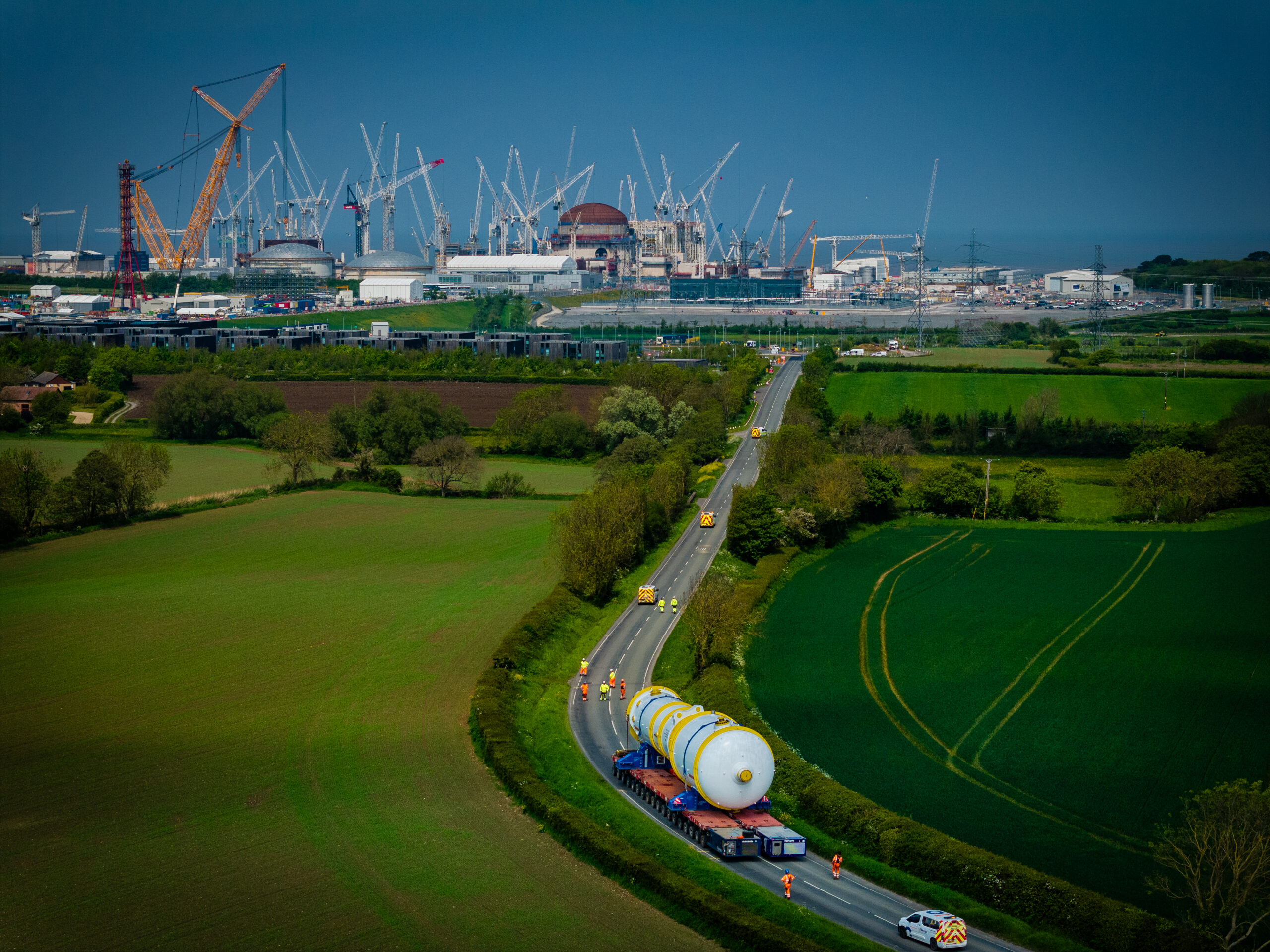
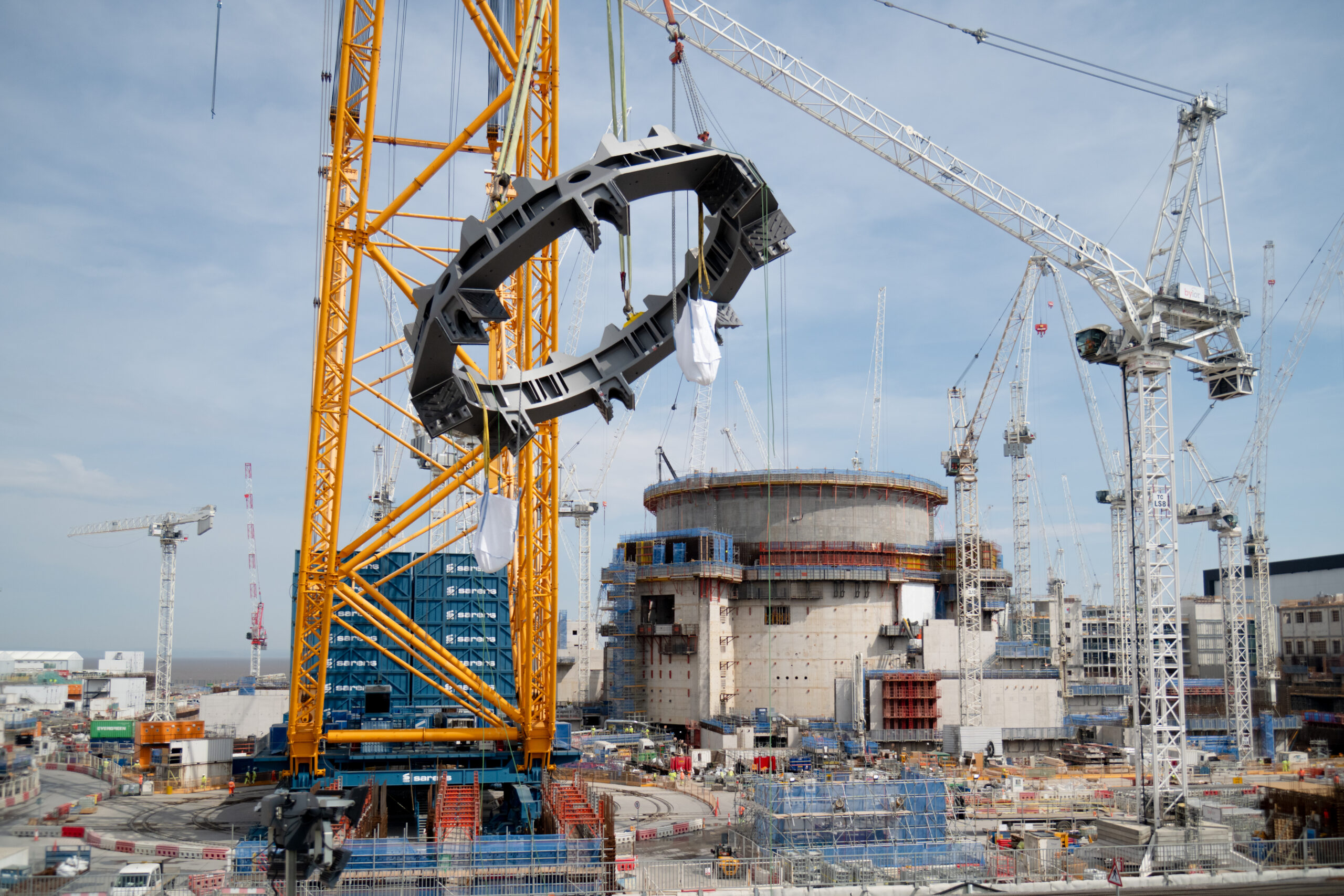
The NIA says the record costs underline why Scotland’s nuclear ban should be reversed to stabilise bills and protect jobs, with new nuclear projects in England and Wales already delivering skilled employment, long-term economic benefits and secure, reliable power when operational.
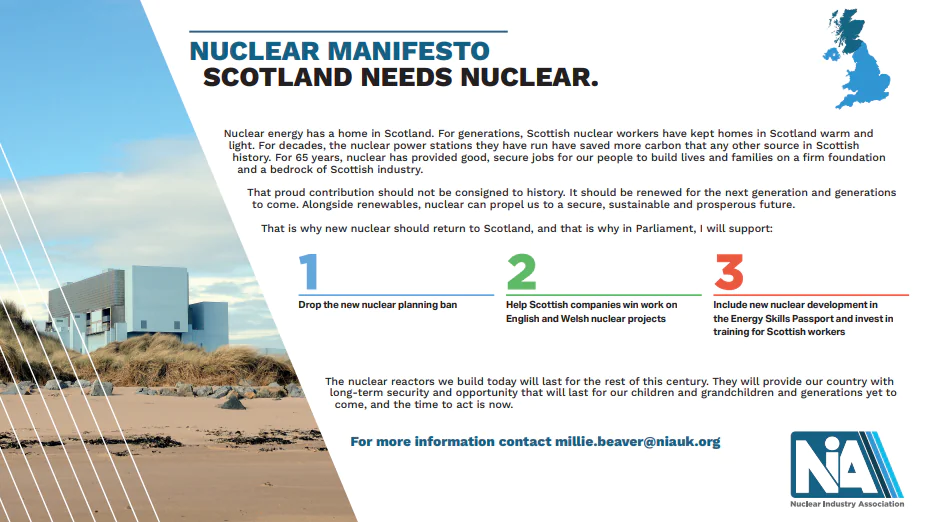
The figures are published as the NIA launches its Scotland Manifesto ahead of the May 2026 Scottish Parliament election, setting out how Holyrood can ensure Scotland is not left behind as new nuclear is built elsewhere in the UK.
The manifesto calls on parliamentarians to champion three key actions:
- Lift the ban on new nuclear in Scotland
- Back Scottish companies to win work on projects in England and Wales
- Include new nuclear in the Energy Skills Passport and invest in skills and training for Scottish workers
Mr Greatrex added:
“Scotland has the skills, the industrial base and the workforce to benefit hugely from new nuclear – but only if policy barriers are removed. With balancing costs now running into the billions, the case for firm, low-carbon power has never been clearer. This manifesto sets out practical steps to cut costs for consumers, support jobs and ensure Scotland plays a full role in the UK’s nuclear future.”
ENDS
Notes to Editors
- The figures cited are based on Nuclear Industry Association analysis of data published by the National Energy System Operator (NESO): https://www.neso.energy/industry-information/balancing-costs
- Energy UK says the cost of paying power stations to turn their production up and down will increase from £2.4 billion in 2023/24 to an estimated £4.7 billion in 2030: Page 11, https://www.energy-uk.org.uk/wp-content/uploads/2025/03/Energy-UK-Report-How-to-cut-bills-March-2025.pdf
- NESO predicts UK balancing costs will peak at £8bn in 2030: https://www.neso.energy/document/362561/download#:~:text=Balancing%20costs%20are%20predicted%20to,will%20help%20us%20achieve%20savings.
- Torness, Scotland’s last remaining nuclear power station, comes offline in March 2030. It has saved 101 million tonnes of CO2 emissions, enough to power every home in Scotland for 29 years.
- Hunterston B nuclear power station closed in January 2022 after more than 45 years of service, generating enough electricity over its lifetime to power every home in Scotland for 31 years.
- The UK currently has nine reactors across five sites providing around 14% of the country’s electricity from 5.9 GW of capacity. Of the current fleet, only Sizewell B will remain in operation after March 2030. Hinkley Point C is due online by the end of the decade.
About the NIA
As the trade association for the civil nuclear industry in the UK, the Nuclear Industry
Association represents over 300 companies across the UK’s nuclear supply chain.
Links
Visit our website: https://www.niauk.org/
Follow the NIA on X @NIAUK and LinkedIn
For further information, please contact:
Iolo James
Head of Communications
[email protected]g
+447517108023