

The employer-led Board of the Engineering Construction Industry Training Board (ECITB) has unveiled its new strategy, Leading Industry Learning, which outlines how it will help to address skills shortages and support industry growth in the nuclear sector.
The strategy sets out a five-year plan, from 2026 to 2030, to develop the skills needed for the delivery of critical infrastructure projects, energy security and net zero ambitions across the engineering construction industry (ECI).
The ECI spans sectors that focus on the construction, maintenance and decommissioning of heavy industry, including oil and gas, power generation, renewables, chemicals, carbon capture and storage, hydrogen as well as nuclear.
Shaped by insights from employers, training providers, asset owners, the government, trade unions and other industry bodies, the plan reflects the real needs and evolving priorities of the industry.
The strategy also recognises the particular needs of the nuclear sector, which is the largest single employer within the ECI, employing 39.2% of the total industry workforce.
It pledges to help increase the size of the nuclear-ready workforce and close the gap on critical skills shortages.
Lynda Armstrong OBE, Chair of the ECITB Board, said:
“The engineering construction industry and its supply chain companies engineer, project manage and install much of the critical infrastructure required across Great Britain. Our new strategy sets out how the ECITB will rise to meet the challenges of an increasingly complex and fast-changing external environment and deliver positive, long-term outcomes for our levy payers, the wider workforce and the country.
“Our approach aligns with the UK Government’s mission-driven focus – particularly its goal to transition to clean power and stimulate sustainable economic growth in doing so. Moving to a five-year strategy cycle reflects our determination to drive long-term outcomes through significant interventions that can deliver lasting impact.”
The ECITB’s latest Labour Forecasting Tool (LFT) predictions state that the nuclear sector workforce within the ECI could increase by 29% in the next five years, growing to more than 46,000 by 2030.
In the strategy, the ECITB states it will work in partnership with the Nuclear Skills Delivery Board on key areas identified in the Nuclear Skills Plan.
Its priorities include:
- Continuing to support apprenticeships and graduates and expand initiatives such as Hinkley Support Operatives (HSO), Work Ready and Scholarships.
- Enhancing the retention of the existing workforce for the lifetime of projects through professional pathway development focused on employer-identified disciplines.
- Strengthening the training provider network through partnership approaches.
Andrew Hockey, CEO of the ECITB, said:
“Our mission to lead industry learning has never been more important than it is now. Achieving the outcomes from this strategy will require collaboration and commitment well beyond the ECITB alone. We will continue to support our employers through grant funding for mission-critical training. At the same time, we will build upon investments like our Regional Skills Hub funding to address systemic and structural challenges facing the engineering construction industry.”
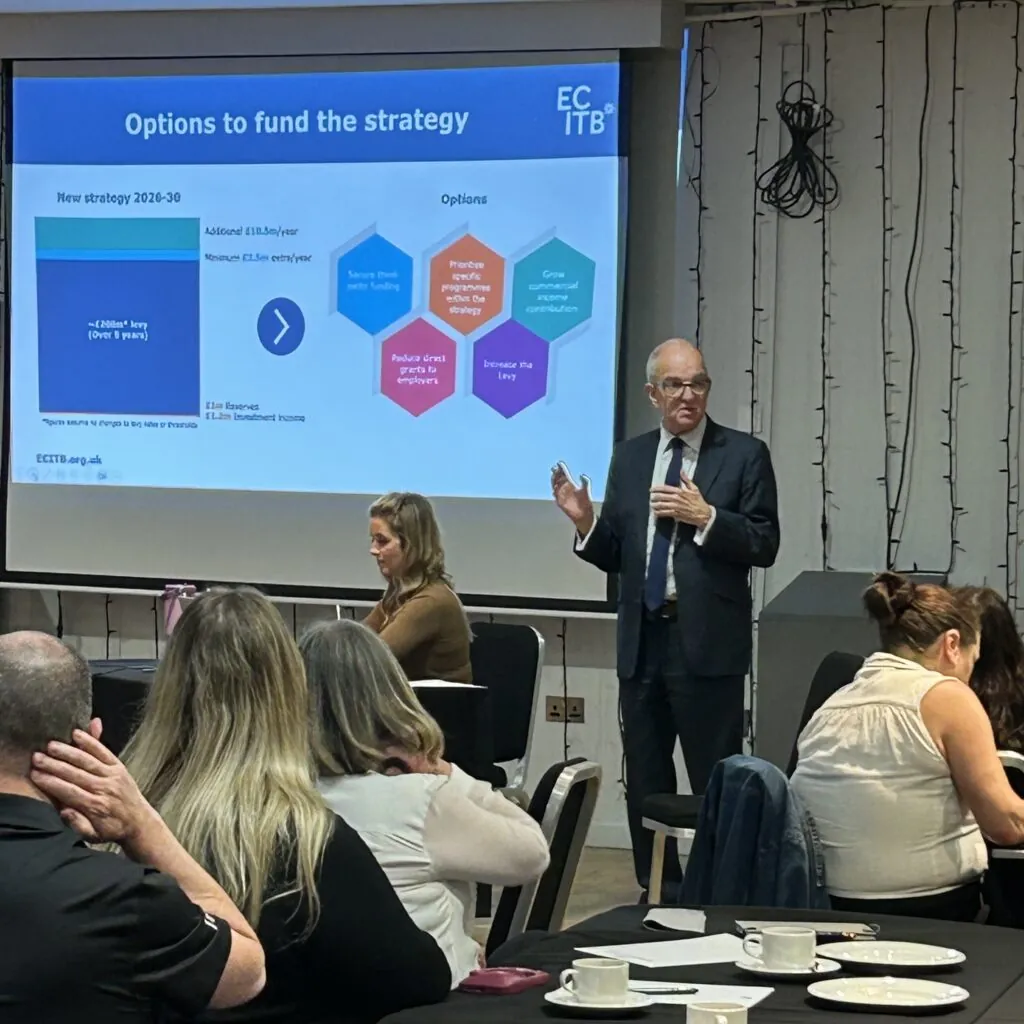
The ECITB strategy is the culmination of 12 months’ work and extensive consultation. This included ten strategy workshops hosted across England, Scotland and Wales throughout Spring 2025.
The open workshops were supplemented by roundtables with specific audiences, including nuclear stakeholders, and an online survey. The feedback gathered through the consultation process is reflected in the final strategy.
Find out more about the ECITB Leading Industry Learning Strategy 2026-2030
Back to the hub